Therapy for trauma, anxiety and couples in West Los Angeles
You’re Doing Well,
But Something Is Off.
That is most of the people I work with. The career is fine. The family is fine. And underneath, there is something that feels off.
I’m Jon Pease, a Licensed Marriage & Family Therapist in West Los Angeles. I work with trauma, anxiety and couples, using EMDR and Brainspotting alongside talk therapy.
When You Say You're Fine
People ask you how you are, and you say that you’re fine. Most of the time, that’s true. What you’re leaving out is that the dis-ease underneath hasn’t moved in a long time. Unfortunately, it tends to surface in places that seem unrelated, maybe in less patience with your spouse or children. Your fuse is shorter now than in the past. Something is off, but you’re not sure what it is.
EMDR was developed for PTSD and is now used for anxiety, depression, and other types of daily struggles. It works by using bilateral stimulation, which means guided eye movements and tapping and sound. This helps let the brain file a memory that it hasn’t been able to file in the past. I utilize EMDR as the base of our work, but we also move into deeper talk therapy for individuals and couples. I am trained in PACT, Gottman, EMDR and Brainspotting, and I utilize my own hybrid of those models.
My Approach
Most people come in with things that need immediate attention, and of course that is where we focus. However, as the crisis resolves, we then begin to look at the chronic aspects of what is holding you back. The work is understanding what sits underneath the crisis of the week and how to respond to it differently. I combine various clinical methods, and I stay current on the research behind them.
My training let me combine EMDR with what I call Adaptive Childhood Reprocessing, or ACR. EMDR can lower the emotional charge of a painful memory. ACR goes deeper, into what we carry from childhood, whether that is a misattuned parent or something much harder.
LVVR is a communication method I developed. It gives couples a way to talk about hard moments as they happen.
I am engaged in the room, and I bring some of myself to it, humor included.
EMDR
Eye Movement Desensitization & Reprocessing
ACR
Adaptive Childhood Reprocessing, deeper work with what we experienced as children
Brainspotting
Uses a fixed eye position to process what the body is still holding
Mind-Body & Inner Child
Working with patterns that formed in childhood, and how your body still responds to them
LVVR & Gottman
A formal method of couples communication
PACT & Imago
Couples work based on attachment
About Jon
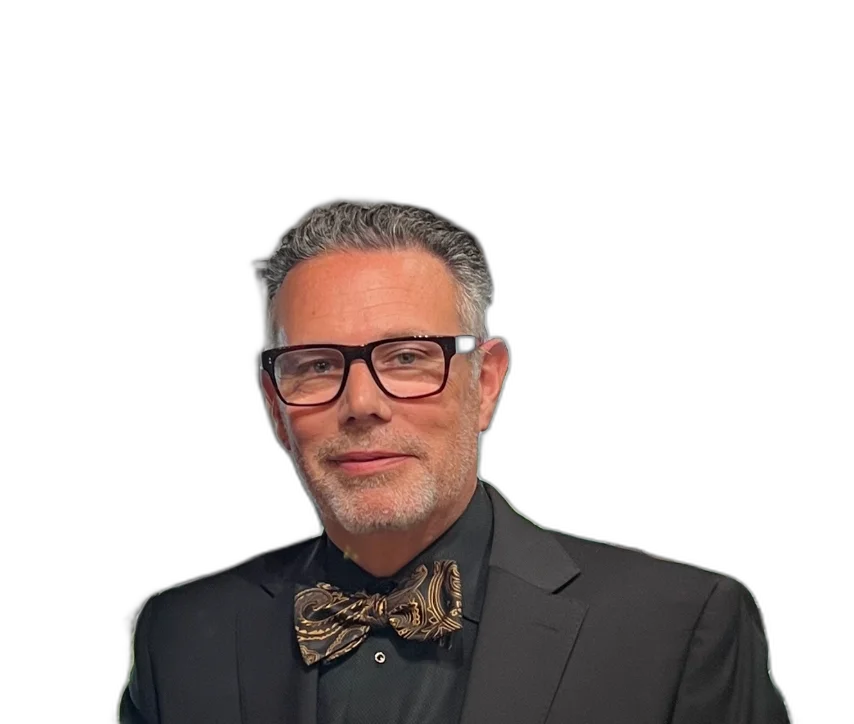
I graduated from Pepperdine Graduate School of Education and Psychology in 2008 and was licensed in 2010. While learning the ropes of becoming a therapist, I worked with at-risk youth and the targets of peer aggression. In 2009 I started my own non-profit to help those who were the targets of bullying respond in a healthier way.
I recently completed my first book, The Nine Energetic Betrayals©. This book is the amalgamation of all of my years of working with couples, teens and individuals, both high-performing and struggling. It's really about how we find where we reside on the energetic spectrum, and how we find internal balance.
I also own Gritworks Collective LLC, a separate coaching company. Coaching is not licensed, does not treat any condition, and is not offered through this practice.
Jon B. Pease, LMFT #48823 · California Licensed Since 2010
Rates & Billing
Rates
A session is priced by its length. See the rates page.
Insurance
I do not take insurance. However, I provide a monthly superbill, which you can submit to your insurance company for out-of-network reimbursement. Whether your plan pays anything back is up to your plan.
I ask for 24 hours' notice to cancel, otherwise the session is charged in full. Talk therapy is available by video anywhere in California. I’m in West LA, near Centinela and Santa Monica Boulevard. If you live or work in Brentwood, Sawtelle or Santa Monica, I’m close. And of course that matters, because EMDR has to happen in the room. EMDR sessions are 75 minutes, and double or triple sessions are available.
How to Reach Me
Address
12304 Santa Monica Blvd #327
Los Angeles, CA 90025
Call or text
Notes
I send occasional notes on the work. Email me and I will add you.